Innovative, high-performance fabrics at the heart of every Ypiresia product.
Materials and processes
3K carbon fibre
High strength, minimal weight, T700-grade performance. For demanding applications: aviation, automotive lightweighting, sports equipment and drones (UAV).
Silicone-coated fabric
Glass-fibre base coated with silicone on one or both sides. The coating provides water tightness, resistance to spatter and abrasion, flexibility when folded and good temperature stability. Covers, heat shields and equipment protection.
High-strength glass fibre
High-density weave for severe thermal and mechanical loads. Resistance to flame and chemicals, dimensional stability, abrasion resistance. The basis of our fire blankets and industrial protection.
Our technical fabrics
All our products are built on a selection of high-temperature fabrics that we test and assemble ourselves. Eleven references are available as samples, from 3K carbon through to lightweight glass fibre, depending on the thermal resistance, flexibility and mechanical strength required. They are listed below from the highest performing to the lightest, with the reference numbers marked on the physical samples.
Coming soon: a video of the blowtorch resistance test will be published for each sample, so you can see how the fabric actually behaves under direct flame.
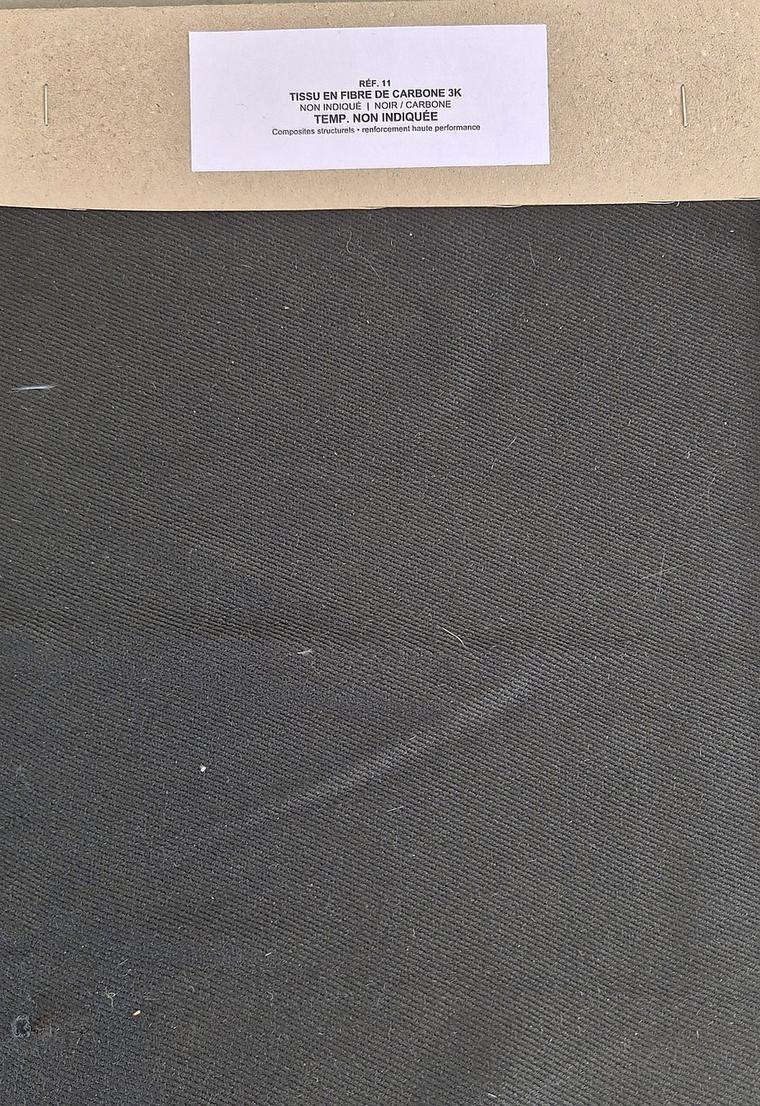
3K carbon fibre fabric
Black · Carbon
Peak 3200 °C · 1500 °C / 10 min · 1000 °C / 90 min
Very flexibleStructural composites and high-performance reinforcement, high-resistance fire blanket for electric vehicles.
Blowtorch test video coming soon
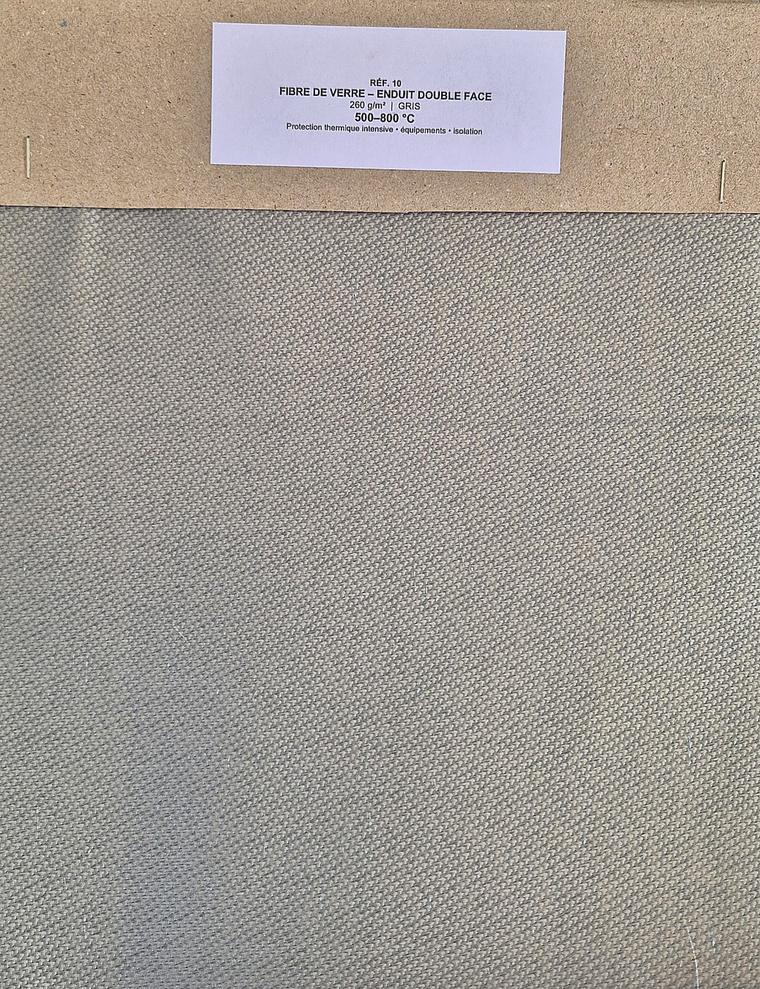
Glass fibre, coated both sides
260 g/m² · Grey
500 to 800 °C · peak 1700 °C
Fairly rigidHeavy-duty thermal protection, industrial equipment, insulation jackets and demanding applications. High-resistance fire blanket for lithium batteries.
EN 13501-1:2018 · EN 13823:2020+A1:2022 · EN ISO 1716:2010
Blowtorch test video coming soon
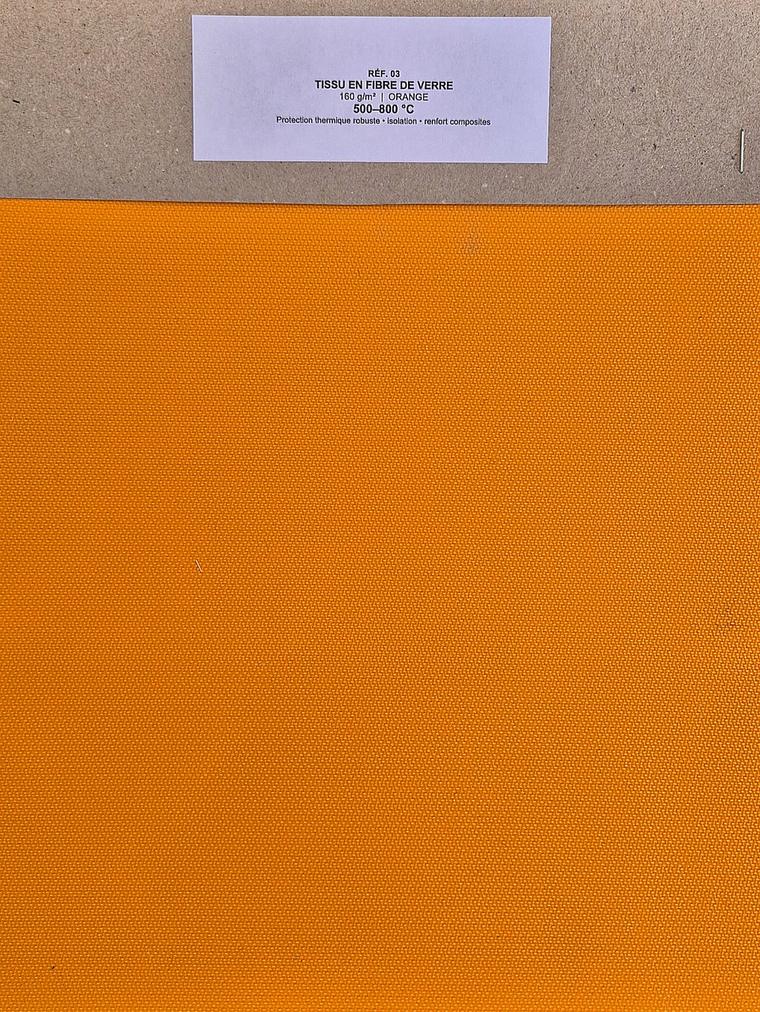
Glass fibre fabric
160 g/m² · Orange
500 to 800 °C · peak above 1000 °C
Fairly flexibleRobust thermal protection, industrial insulation, protective covers, composite reinforcement.
EN 13501-1:2018 · EN 13823:2020+A1:2022 · EN ISO 1716:2010
Blowtorch test video coming soon

Glass fibre fabric
160 g/m² · Grey
500 to 800 °C · peak above 1000 °C
Fairly flexibleRobust thermal protection, industrial insulation, protective covers, composite reinforcement, high-resistance fire blanket.
EN 13501-1:2018 · EN 13823:2020+A1:2022 · EN ISO 1716:2010
Blowtorch test video coming soon

Coated fabric, aluminium on one side
80 g/m² · Grey and silver
500 to 800 °C · peak above 1000 °C
FlexibleHeat shield, radiant heat reflection, insulation covers, thermal protection of batteries.
EN 13501-1:2018 · EN 13823:2020+A1:2022 · EN ISO 1716:2010
Blowtorch test video coming soon
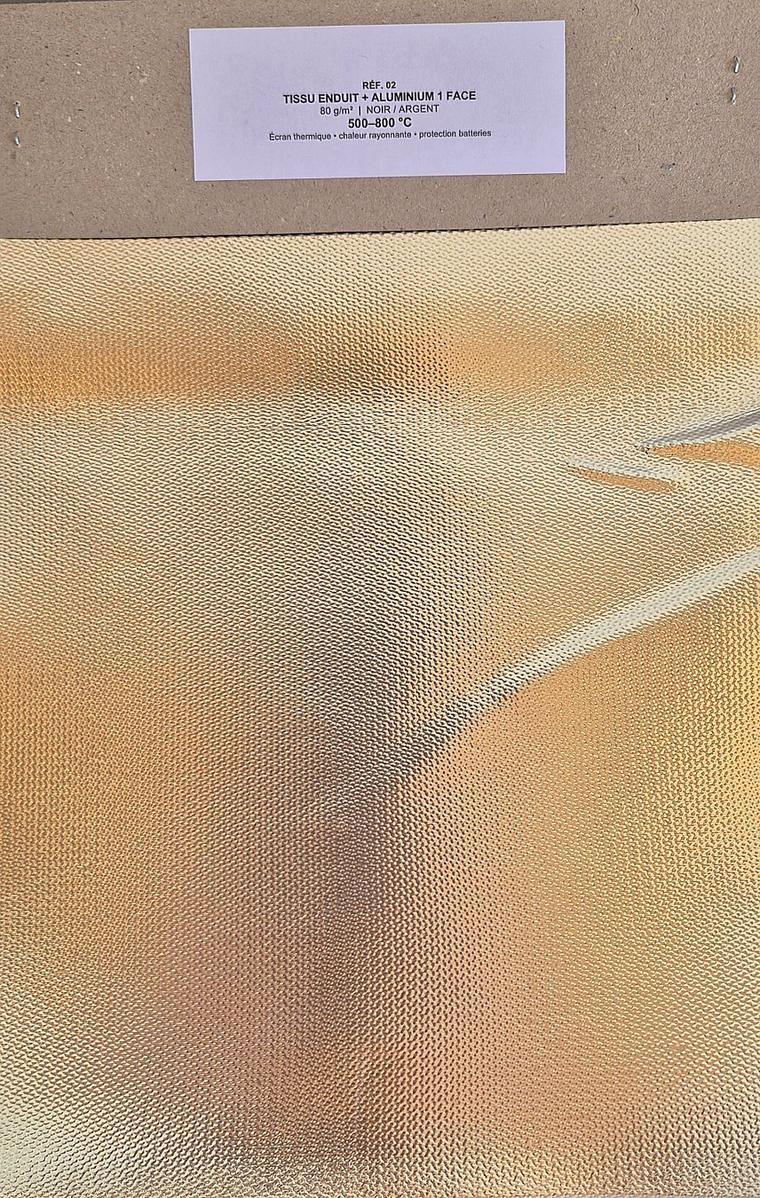
Coated fabric, aluminium on one side
80 g/m² · Black and silver
500 to 800 °C · peak above 1000 °C
Fairly flexibleHeat shield, radiant heat reflection, insulation covers, thermal protection of batteries.
EN 13501-1:2018 · EN 13823:2020+A1:2022 · EN ISO 1716:2010
Blowtorch test video coming soon
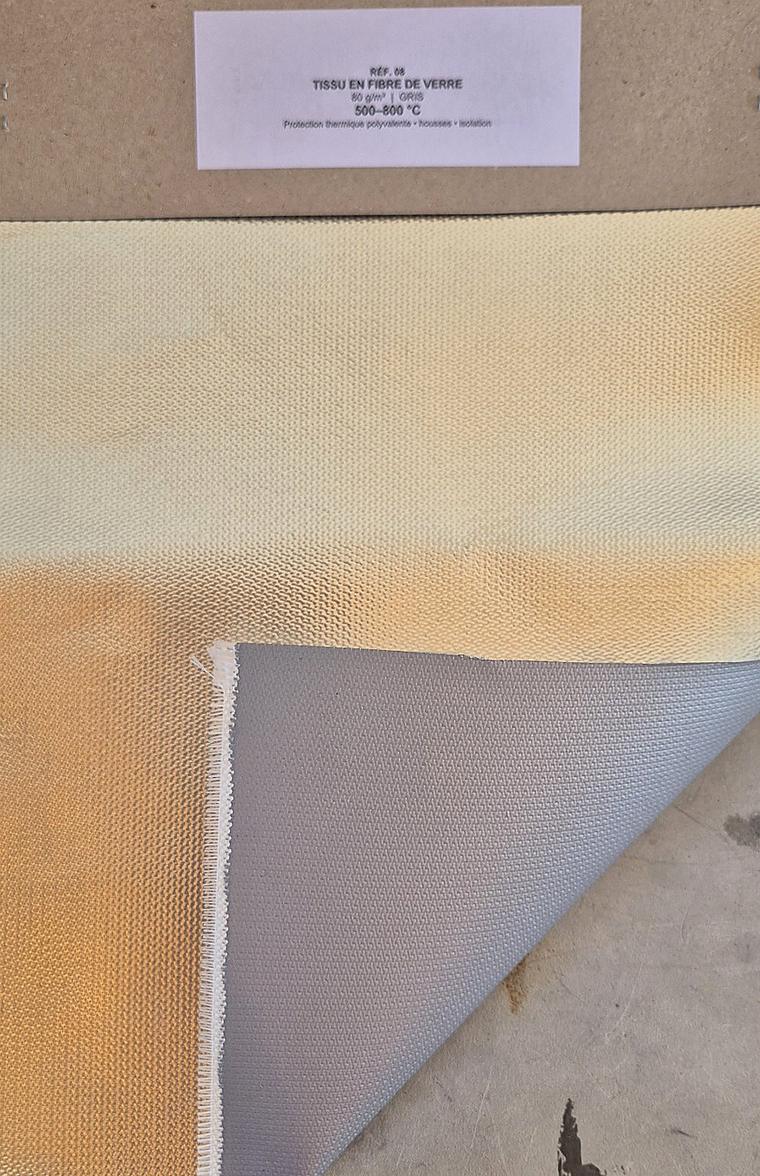
Glass fibre fabric
80 g/m² · White
500 to 800 °C · peak above 1000 °C
Fairly flexibleVersatile thermal protection, insulation covers and jackets, insulation of pipework and ducting, pouches and bags.
EN 13501-1:2018 · EN 13823:2020+A1:2022 · EN ISO 1716:2010
Blowtorch test video coming soon
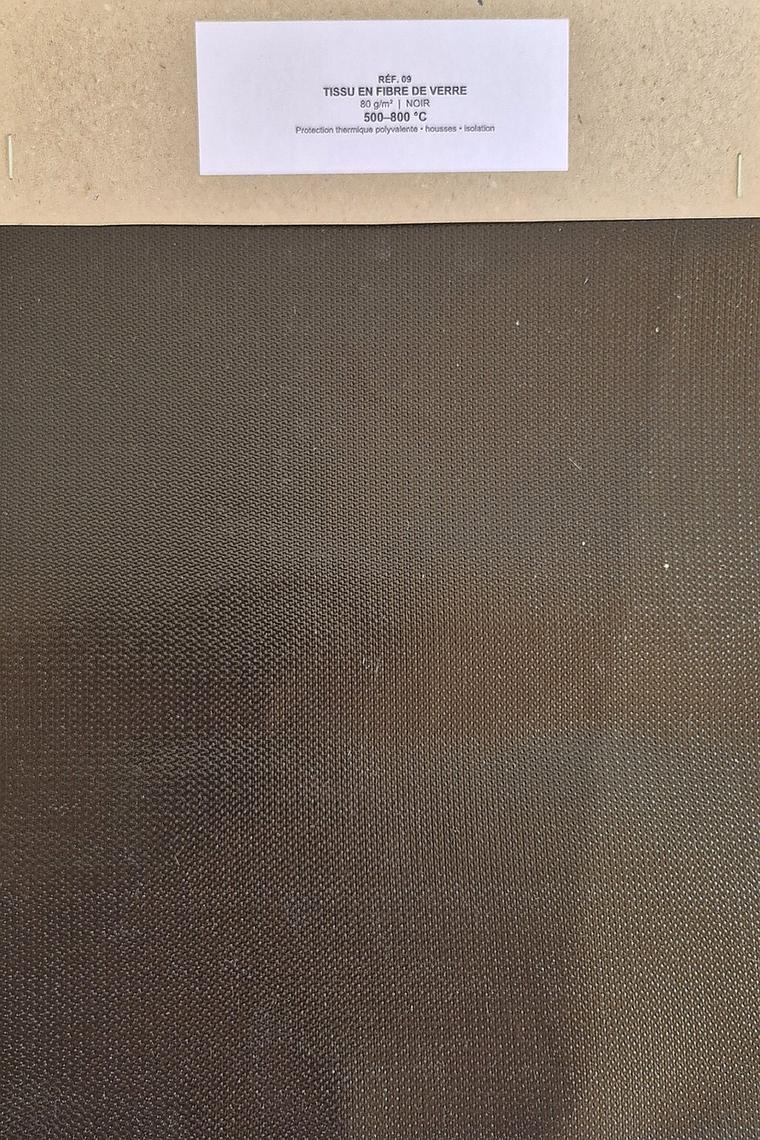
Glass fibre fabric
80 g/m² · Black
500 to 800 °C · peak above 1000 °C
Fairly flexibleVersatile thermal protection, insulation covers and jackets, insulation of pipework and ducting, pouches and bags.
EN 13501-1:2018 · EN 13823:2020+A1:2022 · EN ISO 1716:2010
Blowtorch test video coming soon
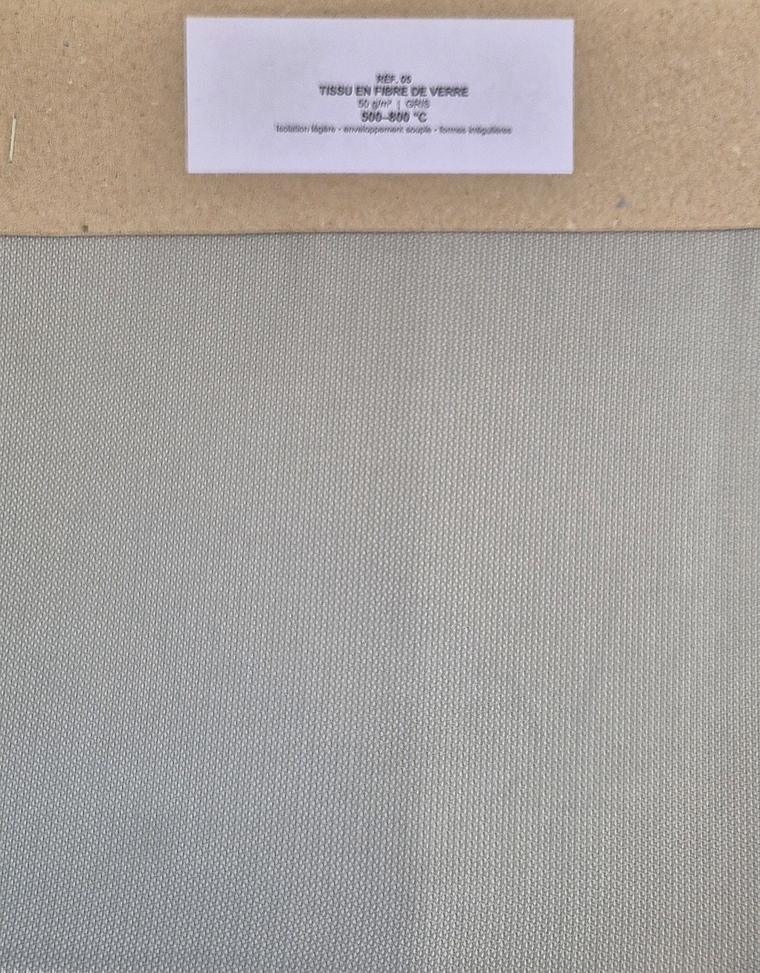
Glass fibre fabric
50 g/m² · Grey
500 to 800 °C
FlexibleLightweight thermal insulation, flexible wrapping, insulation of cables and pipework, irregular shapes.
EN 13501-1:2018 · EN 13823:2020+A1:2022 · EN ISO 1716:2010
Blowtorch test video coming soon

Glass fibre fabric
50 g/m² · White
500 to 800 °C
FlexibleLightweight thermal insulation, flexible wrapping, insulation of cables and pipework, irregular shapes.
EN 13501-1:2018 · EN 13823:2020+A1:2022 · EN ISO 1716:2010
Blowtorch test video coming soon
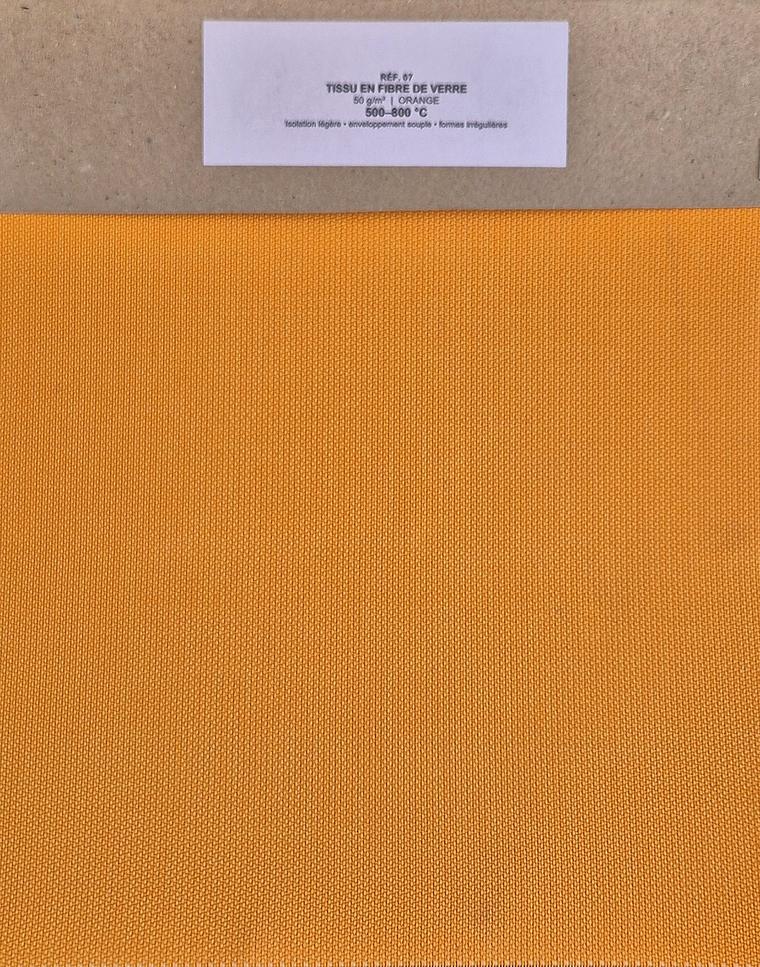
Glass fibre fabric
50 g/m² · Orange
500 to 800 °C
FlexibleLightweight thermal insulation, flexible wrapping, insulation of cables and pipework, irregular shapes.
EN 13501-1:2018 · EN 13823:2020+A1:2022 · EN ISO 1716:2010
Blowtorch test video coming soon
Fire testing and classification. Our fabrics, apart from 3K carbon fibre, are assessed to EN 13501-1:2018, fire classification of construction products and building elements, part 1: classification using data from reaction to fire tests. Two test methods are applied: EN 13823:2020+A1:2022, reaction to fire tests for building products excluding floorings exposed to thermal attack by a single burning item, and EN ISO 1716:2010, determination of the gross heat of combustion.
Blowtorch test: our protocol
At Ypiresia Swiss Fire Protection we apply a fixed protocol, based on aviation test methods (ISO 2685) and on thermal barrier testing for batteries (UL 2596). Every result is therefore measurable and repeatable.
Preparation
We test at least three samples of 300 × 300 mm. They are conditioned for 24 hours at 23 °C and 50 % relative humidity, then clamped to a frame. The flame hits the centre of the sample, perpendicular to its surface.
Heat source
We use a professional propane burner fed from a cylinder, with an adjustable regulator, to keep the flow constant throughout the test. The distance between nozzle and fabric is set between 50 and 100 mm. Before each series, the temperature at the point of impact is checked: the target is between 1000 and 1100 °C.
Test sequence and measurements
| Parameter | Value |
|---|---|
| Exposure steps | 5 minutes and 15 minutes |
| Temperature readings | At 1, 5 and 15 minutes |
| Documentation | Video |
Assessment criteria
For each sample we record:
- any burn-through, and the time at which it occurs
- afterburning
- smoke emission
- shrinkage
- mass loss
Every test is documented in a dated and signed report.
Custom design and prototyping
Beyond our catalogue, we design and build custom products from these fabrics. You give us your constraint, thermal, dimensional or operational, and we develop the matching solution, from prototype to small series.
- Covers and blankets matched to a specific size or piece of equipment
- Heat shields, machine and workstation protection
- Pouches, bags and transport enclosures for lithium batteries
- Combining several fabrics to balance resistance, flexibility and reflection
- A prototype built before validation and production
On request
Request a quoteAVD technology in action
Aqueous vermiculite dispersion (AVD) is a certified technology for lithium-ion battery fires. It stops cell-to-cell propagation, where conventional extinguishers are ineffective or even dangerous.
Unlike a conventional extinguisher, AVD does not aim to put the battery out: it limits ejections, contains the fire and lets the battery burn out safely. Sprayed as a mist, the agent forms a film that dries instantly; the vermiculite platelets expand, bond together and form a non-combustible barrier, cool the fuel and isolate the cells to stop thermal runaway.
Frequently asked questions: Lith-Ex AVD extinguishers
What is an AVD extinguisher?
How does it work?
Does it actually extinguish the battery?
Which sizes are available, and for what use?
Are they approved in Switzerland?
What is the warranty?
Is regular servicing required?
What happens after the extinguisher has been used?
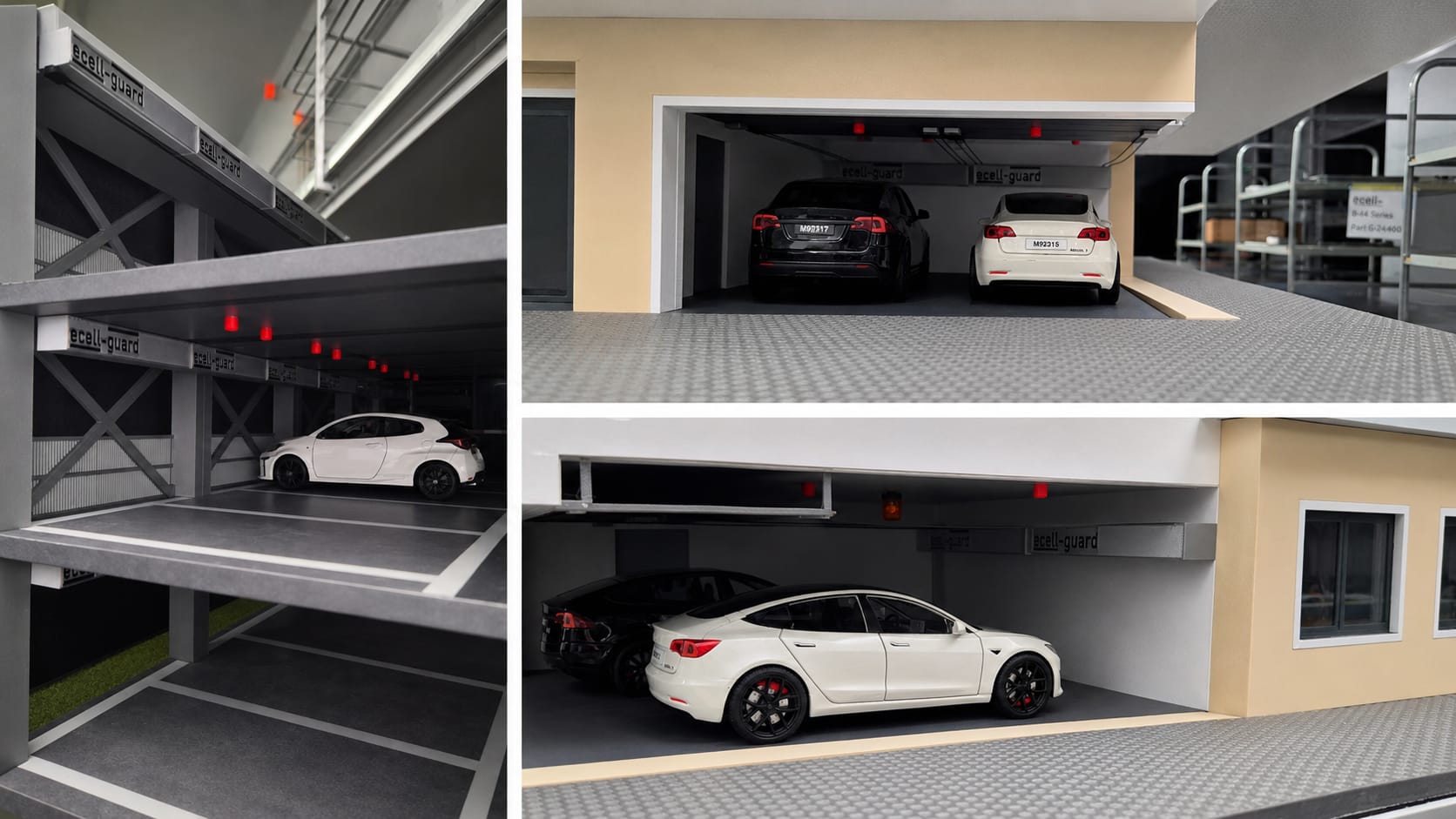
The ecell-guard system

Early sensor detection, automatic triggering, deployment of the cover over the vehicle within seconds, containment of flames and controlled venting of pyrolysis gases, all without human intervention. Ypiresia is the approved reseller for Switzerland.
Frequently asked questions: ecell-guard system
What is the ecell-guard system?
How does the system work?
Is human intervention needed?
Where can it be installed?
How much does it cost?
Tested, certified, approved
All our products undergo rigorous testing by independent laboratories (SGS, TÜV). Compliance with EN 13501-1 and ISO standards, and AEAI approval. Our vehicle fire blankets comply with DIN SPEC 91489:2024-11.